If it leaves the wall, you know in seconds.
Not when you get home. Not when someone finally notices. The second the frame lifts off its hook, your phone lights up — and if the sensor goes quiet after that, you hear about that too.
Temperature, humidity and movement, measured every secound and judged against the standard conservators use — not a number someone picked off a chart. If a frame lifts off the wall, you'll know in seconds. If the air starts turning against your work, you'll know the same day, while it's still something a phone call can fix.
Seconds, not hours
Movement, tilt and impact, straight to your phone.
EN 15757
The European conservation standard, learned from your own walls.
Five years on a battery
No wiring, no Wi-Fi, no router, no installer.
35 mm across
Behind the frame, out of sight, forgotten within a week.
Everything is included — three sensors, the hub, the connection, the app, the alerts, and replacements if anything ever fails.
By the time damage is visible, it's permanent. Vokter watches the air around your paintings and whether they're still on the wall — seconds if something moves, the first day if the air turns against them. Wherever in the world you happen to be.
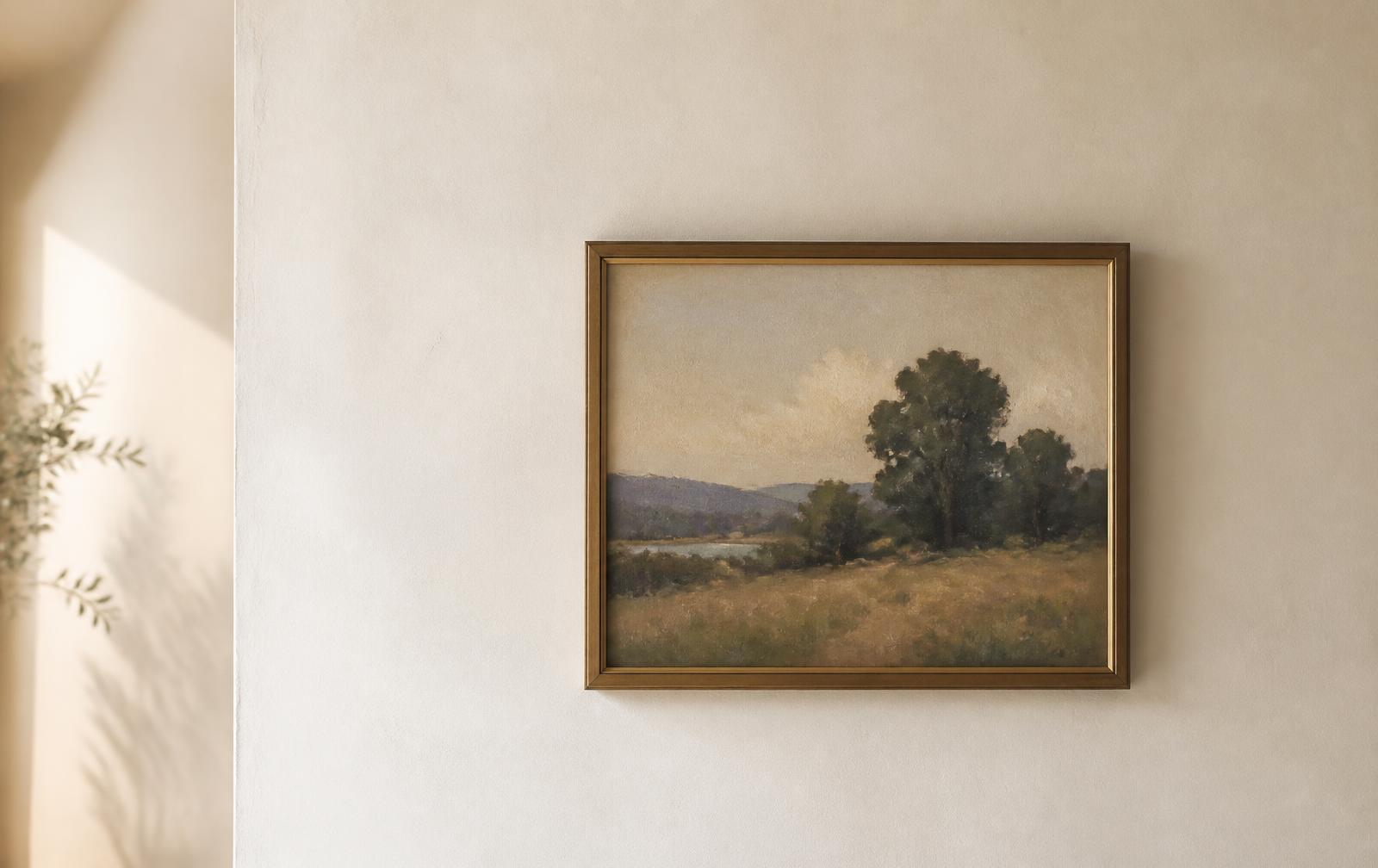
Not when you get home. Not when someone finally notices. The second the frame lifts off its hook, your phone lights up — and if the sensor goes quiet after that, you hear about that too.
A radiator fails in January while you're away. The room cools, the humidity climbs, and inside a week mould has taken hold on the back of the canvas — where nobody will think to look for months. Nothing looked wrong. Nothing made a sound. Vokter watches how fast conditions are moving, not just where they end up, so you hear about it on the first day, while it's still a phone call to a neighbour.
Every house has a rhythm. Sun on the south wall at two. Heating at six. Windows thrown open on the first warm Saturday in April. Vokter learns yours, and stops mentioning things that are merely Tuesday — so on the day it does speak, you believe it.
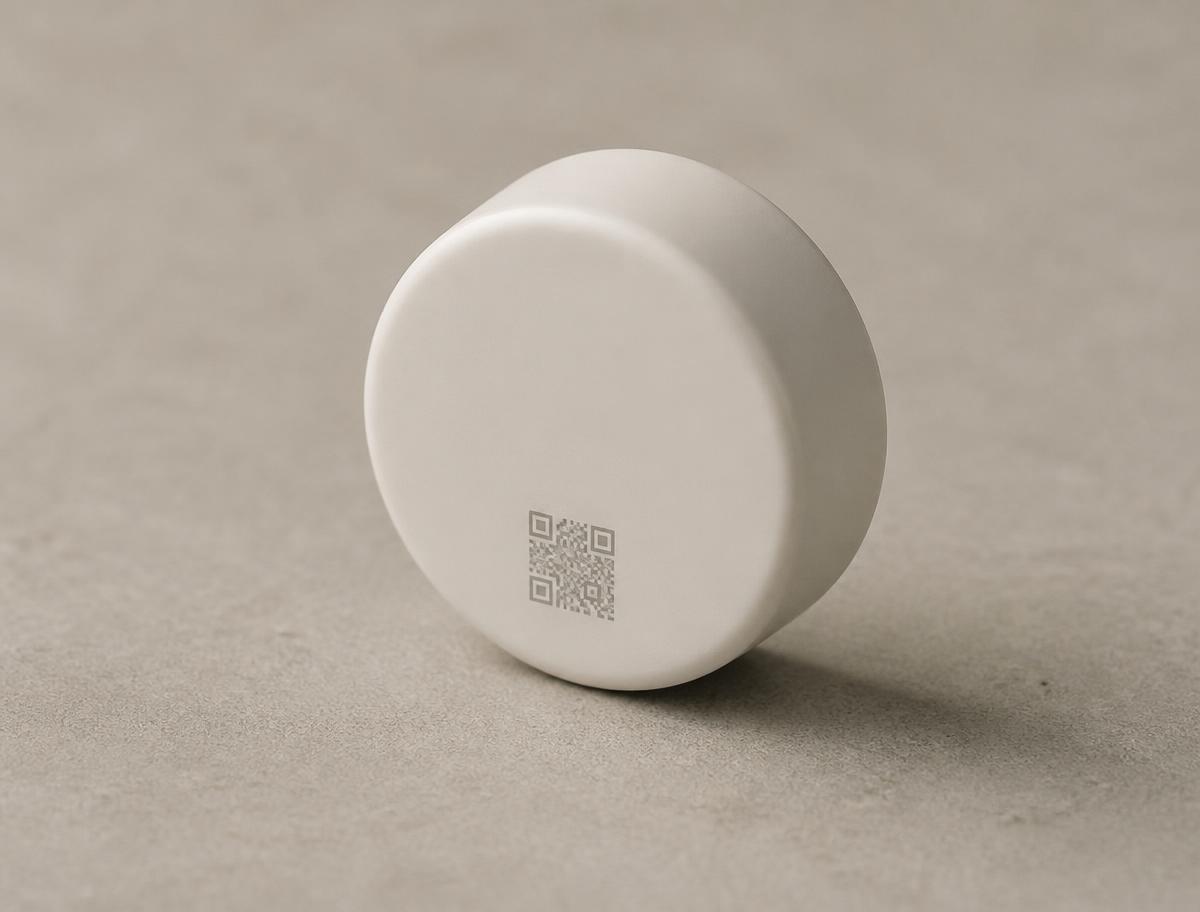
It's the size of a large coin. No tools, no wiring, no holes. Nothing touches the work itself.
It has its own connection — no Wi-Fi password, no router settings, no app pairing dance. It keeps working through a power cut.
The hard limits work from the first minute. Over the following weeks Vokter also learns what normal looks like in your home — and then it goes quiet, and stays quiet, until it shouldn't be.
A cheap sensor gives you two fixed lines and shouts when a reading crosses one. Set them tight and your phone never stops — the afternoon sun on a south wall is enough. Set them loose and you find out far too late.
European Standard EN 15757 describes a better approach, developed for museums and historic buildings. Instead of one number for every room in every country, it starts from what this place actually does across a year, and measures everything against that. Your wall in February is not your wall in July. A single number cannot be right in both.
Vokter follows that method. It learns the slow seasonal rhythm of your room and sets its alert band around it — narrow enough to catch a real problem, wide enough to ignore a sunny Tuesday. The band moves with the year. It never moves past the limits that are wrong for any painting, anywhere.
| Temperature | ±0.2 °C |
|---|---|
| Relative humidity | ±1.8 % |
| Movement | Immediate, with tilt and impact |
| Reporting | Full history every day, alerts instantly |
| Battery | 5 years, user-replaceable |
| Range | One hub covers a typical apartment |
Readings are logged every five minutes and delivered daily, so your history is complete rather than sampled. Alerts don't wait for the daily upload — they go out the moment they happen.
€25 a month. Three sensors and a hub.
One sensor gives you a number. Three let you look after three different things — the painting in the living room, the wine downstairs, the cabinet you'd rather nobody opened. And where two of them do share a room, the difference between them is usually what finds the problem: an exterior wall and an interior wall can differ by several per cent of humidity, and it's the exterior one that does the damage.
Everything is included — the hardware, the connection, the app, the alerts, and replacements if anything ever fails. There's nothing to buy and no second invoice.
€300 a year. Less than you spent on the frame.
Sixty days, not thirty. Vokter spends its first weeks learning your rooms, so a month isn't long enough to judge it fairly. Take 60 days from the day it arrives. If it isn't for you, we refund everything you've paid and cover the postage both ways — no conditions, and nothing to explain.
12-month minimum term after the first 60 days. Your 14-day statutory right to withdraw applies as well and is unaffected — see Right of withdrawal.
Another sensor — €10 a month. For another room, another wall, or the piece you just brought home.
Another hub — €15 a month. For large houses, thick walls, or a second address.
Most people need Vokter Home. If what you're protecting doesn't stay in one place, read on.
€20 a month. One sensor. No hub. Goes anywhere.
Some things don't stay on a wall. A piece out on loan. A work in storage. The painting that moves with you between two houses, or the one you're not entirely sure you'll get back.
Roam carries its own connection, so it needs nothing around it — no hub, no Wi-Fi, no socket. It reports temperature, humidity and movement wherever in the world it happens to be, and unlike the wall sensors, it can tell you where that is. Indoors, roughly. Outdoors and moving, precisely.
One trade-off, stated plainly: it holds a year on a charge rather than five. Once a year, it wants an evening on a cable.
Vokter started with four of my grandfather's paintings on a bad wall. Here's the rest of it.
Nothing touches the work. The sensor mounts on the back of the frame or on the wall beside it, using adhesive that removes cleanly. If you'd rather not attach anything at all, it works on a nearby shelf — slightly less precise about movement, just as good about the air.
Almost never — and that's the design goal, not a happy accident. Once it has learned your rooms, most homes see a handful of alerts in a year. Anything chattier and you'd mute it, and a muted sensor is worth nothing at all.
The hub has its own battery and keeps working. The sensor never needed mains power in the first place.
You get told. Vokter expects to hear from every sensor on a schedule — silence is treated as an event, not as good news.
With Vokter Roam, yes. It carries its own connection and reports its position in real time, across borders. Outdoors and moving, that position is precise. Indoors it's approximate, because satellite positioning doesn't work through a roof. With Vokter Home, no. The wall sensors speak through your hub, so the moment a piece leaves the building they go silent. You'll know that happened and you'll know exactly when — which gives you and the police a starting point most people don't have — but the sensor won't follow it across town. Neither stops a theft, and a sensor that's found can be removed. We'd rather tell you that now than let you discover it later.
No. It's the part insurance can't do. A policy handles the loss after it happens; Vokter is about the hours before, when the situation is still fixable.
Three because most homes have more than one thing worth watching, and they're rarely in the same room. A sensor doesn't much care what it's looking after: put one behind the painting, one in the wine cellar where a failed thermostat costs you a case at a time, and one on the drinks cabinet, where all you want to know is whether anybody opened it. If you have more than three, sensors are €10 a month each.
The wall sensors are small, invisible and last five years, but they need a hub in the building to speak through. Roam carries its own connection and works anywhere on earth, including in the back of a van — but it's larger, it knows roughly where it is, and it needs charging once a year. If your art stays home, you want sensors. If it travels, you want Roam.
No. The hub brings its own connection. There is nothing to configure.
The readings are yours. We don't sell them, we don't share them, and you can export or delete everything at any time.
Only in that it matters more. Vokter asks nothing of you while you're gone — no checking in, no app to open, no weekly report to read. If your phone stays quiet, everything is fine. If it doesn't, you'll know in time to ask someone to go over and look.
That's one of the better uses for it. An unheated house in winter is exactly where humidity does its worst work, unobserved. You'll need mains power for the hub, but nothing else.
Nothing is charged, and nothing is committed. You tell us what you'd like and we reply within a working day or two with an offer — usually with a question or two about your home first, because the right number of sensors depends on the building. If the offer suits you, we send the hardware. That's when the subscription starts.
Tell us within 60 days of delivery and we refund everything you've paid, including postage in both directions. You don't need to explain, and there's nothing to negotiate. Send the sensors back and we're done. Sixty days rather than thirty because Vokter spends its first weeks learning your rooms — a month wouldn't be a fair test of it. Separately from this, and regardless of it, you have the 14-day right to withdraw that the law gives anyone who buys at a distance.
Responsible for a building, or more than a handful of pieces? Write to us — post@vokter.art
You know which one it is. Most people with art have one piece they'd turn back for — and it's usually not the valuable one. It's the one with a story attached. A wedding present. Something bought badly and far too early, before you knew anything, that turned out to be right.
A policy can replace a sum. It can't replace the object, and it has nothing at all to say about the slow version of losing it — the dry winters, the wall that was always a little too warm, the damage that arrives so gradually that no single day was the day it happened.
That's the part Vokter is for.
€25 a month. Ten minutes to set up. Then quiet, until there's a reason.